
Resources
Find information and resources to support your desmoid tumor patients, from diagnosis through treatment with OGSIVEO.
Important Considerations
- This publication includes both data consistent with the OGSIVEO Prescribing Information and data that are not included in the Prescribing Information
- Data not found within the Prescribing Information should be interpreted with caution and could represent chance findings
- For complete information regarding the use of OGSIVEO, please see the full Prescribing Information
Analysis Limitations
- The long-term data are based on a post-hoc analysis in patients initially randomized to OGSIVEO in the DeFi study
- In an open-label extension, there is a potential for enrichment of the long-term data in the remaining patient populations since patients who are unable to tolerate or do not respond to the drug often drop out
- Extension data are as observed and should be considered descriptive in nature
- No conclusions of safety or efficacy should be made based on these results
- These data are not included in the OGSIVEO Prescribing Information

Side Effect Management Resource Guide
Review practical strategies for helping patients stay on track with their therapy, including recommended dose modifications to help manage certain side effects.

How to Order/Rx Guide
Discover how to prescribe OGSIVEO for your adult patients with progressing desmoid tumors who require systemic treatment.

DeFi Study Publication
Review the results of the pivotal DeFi study published in The New England Journal of Medicine. This publication contains data and analyses that are not included in the OGSIVEO Prescribing Information. Please see FULL PRESCRIBING INFORMATION on this website.

Long-Term Data From the DeFi Trial
Review up to four years of long-term data from the DeFi trial in the Journal of Clinical Oncology. This publication contains data and analyses that are not included in the OGSIVEO Prescribing Information. Please see FULL PRESCRIBING INFORMATION on this website.

OGSIVEO Overview for Healthcare Professionals
Review a summary of key information about OGSIVEO, including clinical data, guideline recommendations, and information about adverse events.
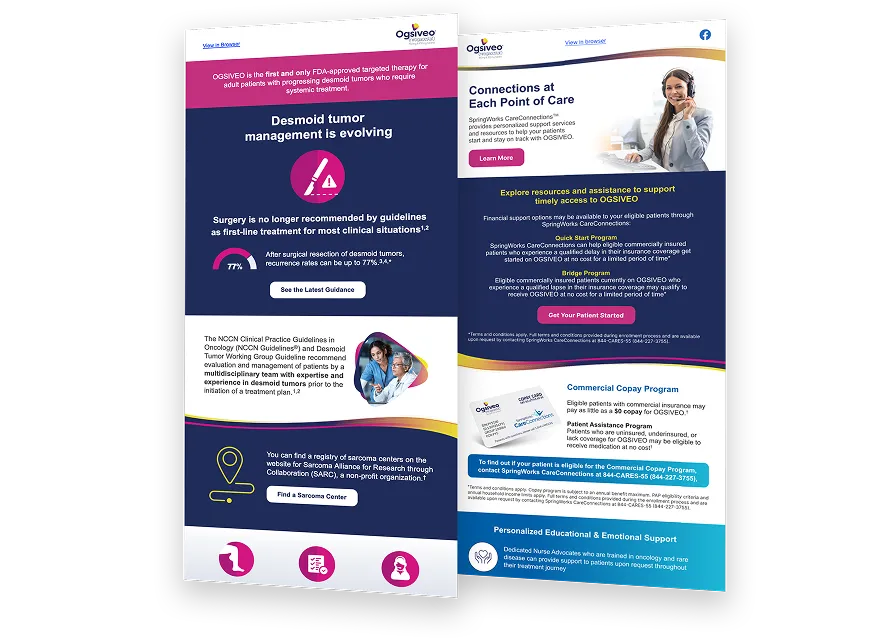
Sign Up for Information About OGSIVEO
Sign up to receive information and resources for your practice and your patients, including clinical data and tips for managing patients on OGSIVEO.
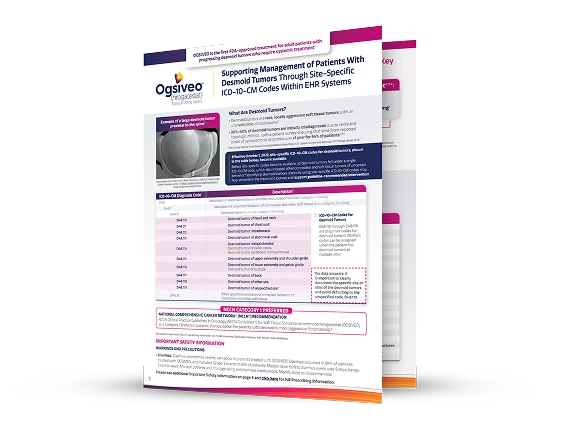
ICD-10-CM Codes for Desmoid Tumors
Location-specific ICD-10-CM codes for desmoid tumors went into effect on October 1, 2023. The codes can help you document location-specific desmoid tumor diagnoses in your patients.

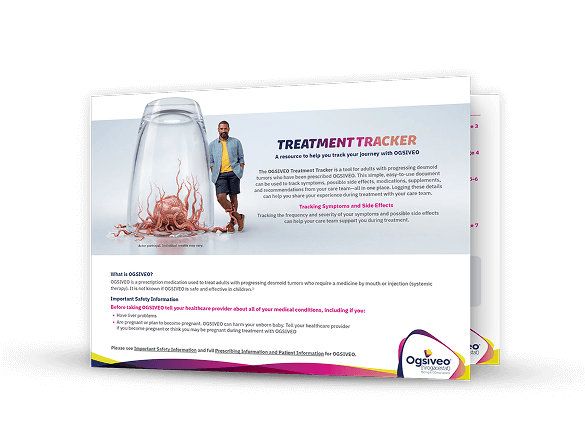
Patient Treatment Tracker
Provide your patients with this tool to help them track symptoms and potential side effects throughout their treatment.

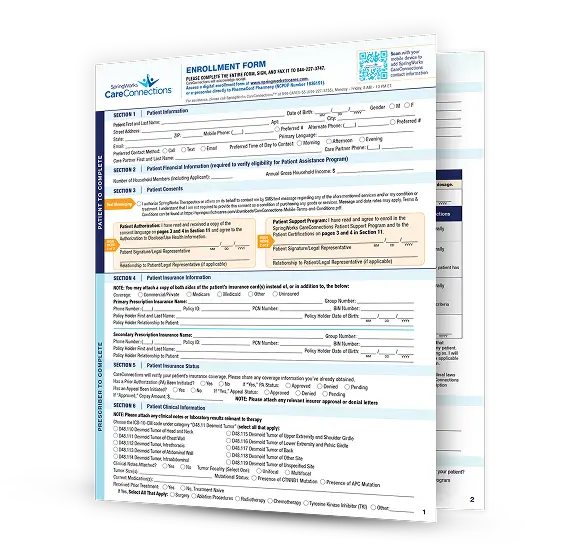
SpringWorks CareConnections® HCP Brochure
SpringWorks CareConnections provides personalized support services and resources to help your patients start and stay on track with OGSIVEO.

Patient Profiles
Explore hypothetical patient profiles to learn about examples of progressing desmoid tumors and when treatment with OGSIVEO may be appropriate.
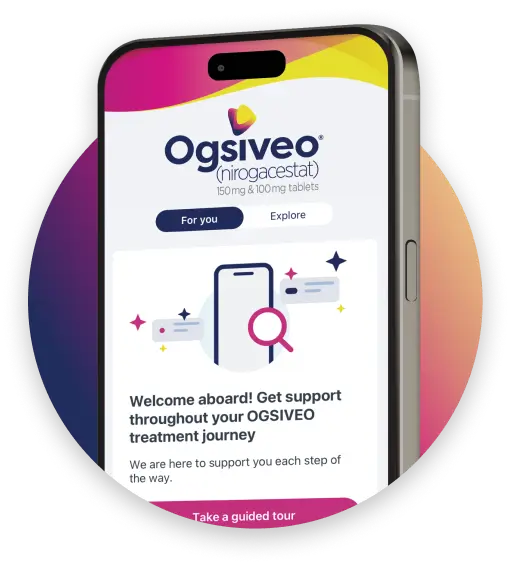
OGSIVEO Digital Companion
Available through the free Medisafe app, patients can set up personalized medication reminders and alerts, and receive other helpful tips throughout their treatment journey.
Advocacy Groups
The following advocacy organizations can provide additional support and information for your patients with desmoid tumors










The organizations listed are independent of SpringWorks Therapeutics. SpringWorks Therapeutics is providing these links to help patients find more information about desmoid tumors, but inclusion on this list does not represent an endorsement or a recommendation from SpringWorks Therapeutics for any group or organization. Logos are used with permission.
